Guide · Evergreen
The layering matrix: dressing for cooler days without looking like a duvet
Every rider owns too much summer kit and not enough of the stuff that covers the other eight months. Here's the honest system for 20°C down to freezing — what you actually need, in the order you should buy it.
The one rule that matters
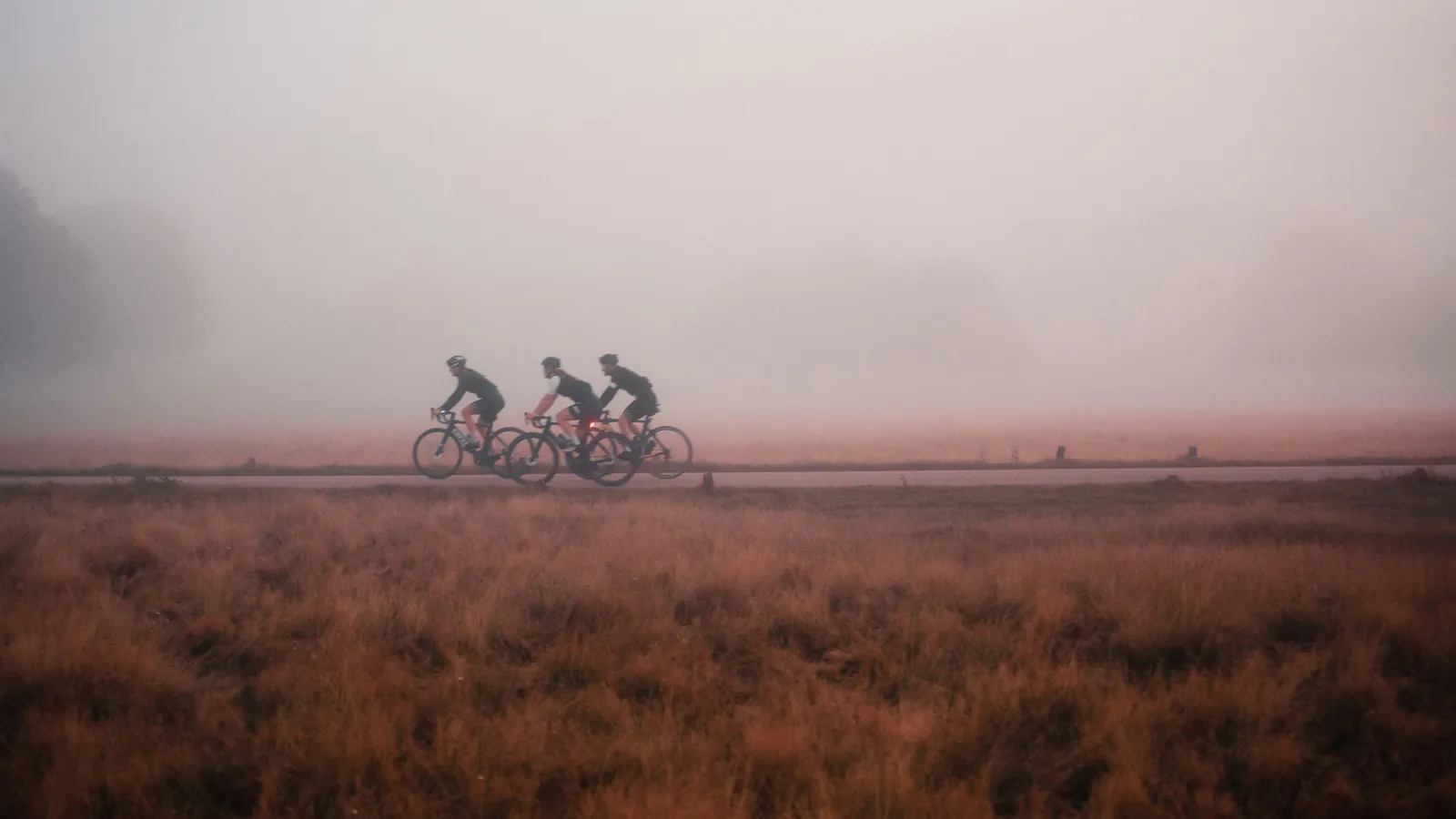
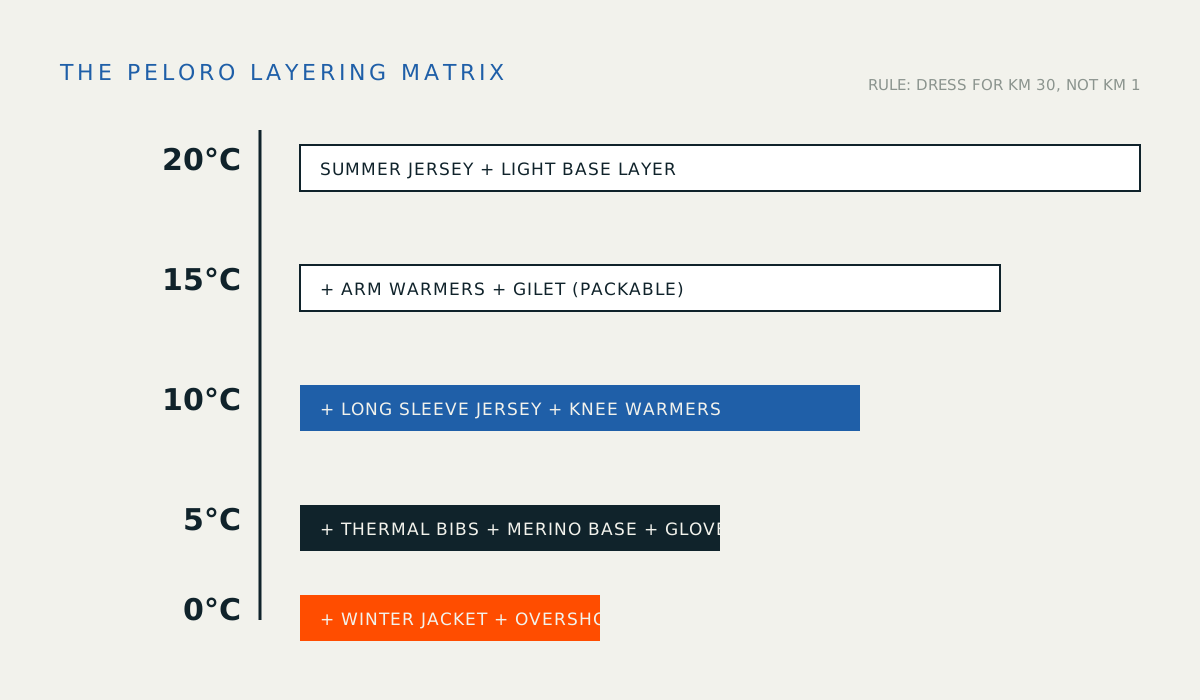
Dress for kilometre 30, not kilometre 1. If you're comfortable standing at your front door, you're overdressed. You should be slightly cold for the first ten minutes; your engine will handle the rest. Every layering mistake we've ever made — and we've made all of them — came from ignoring this.
15–20°C: the golden zone
This barely counts as layering. Your normal summer jersey plus a light base layer does the job; the base layer isn't for warmth as much as for moving sweat off your skin so the descent home doesn't chill you. If the ride starts cool and ends warm, this is arm-warmer territory — see below.
10–15°C: the two smartest purchases in cycling
Arm warmers and a packable gilet. Together they cost less than any jacket, they cover an enormous range of conditions, and both disappear into a jersey pocket the moment the sun comes out. The gilet is arguably the most style-defining piece in road cycling — the difference between a shapeless windproof and a well-cut one is the difference between "commuter" and "cyclist". This category is exactly where the premium brands in our Style Leaders tier earn their price: cut, packability and fabric quality vary enormously, and cheap gilets flap.
5–10°C: commit to long sleeves
Below about 12 degrees, the arm-warmer trick stops being clever and starts being cold. A proper long-sleeve jersey — light thermal fabric, brushed inside — plus knee warmers keeps your joints happy; knees genuinely dislike working cold. Keep the gilet in the pocket for descents. If you buy one autumn piece this year, make it the long-sleeve jersey: it's the piece you'll wear from September to April.
0–5°C: this is where thermal bibs earn their keep
The classic beginner mistake is to spend everything on jackets and ride through winter in summer bibs with leg warmers. Reverse it: a proper thermal bib tight is the single biggest comfort upgrade for cold-weather riding. Add a merino or heavy synthetic base layer and full-finger gloves. Merino's party trick is staying warm when damp and not smelling after the third ride — worth the price for anyone riding through a real winter.
Around freezing: jacket weather, finally
Only now does the winter jacket enter. A good one is windproof in front, breathable in back, and cut close enough that it doesn't balloon at 40 km/h. Overshoes and a headband under the helmet close the last gaps — extremities give up long before your core does. And that's the full matrix: seven or eight pieces covering everything from 20 degrees to frost, which is a shorter shopping list than most riders fear.
The buying order, summarised
- 1. Light base layer — cheap, works year-round
- 2. Arm warmers + packable gilet — the biggest range for the least money
- 3. Long-sleeve thermal jersey + knee warmers — your September-to-April workhorse
- 4. Thermal bib tights + merino base + gloves — real cold starts here
- 5. Winter jacket + overshoes — the final boss, buy it last
We keep current favourites in each of these categories in the Kit Finder, updated as the good stuff drops.
◂ Back to Journal