Opinion · Buying Advice
The price of speed: is premium summer kit actually worth it?
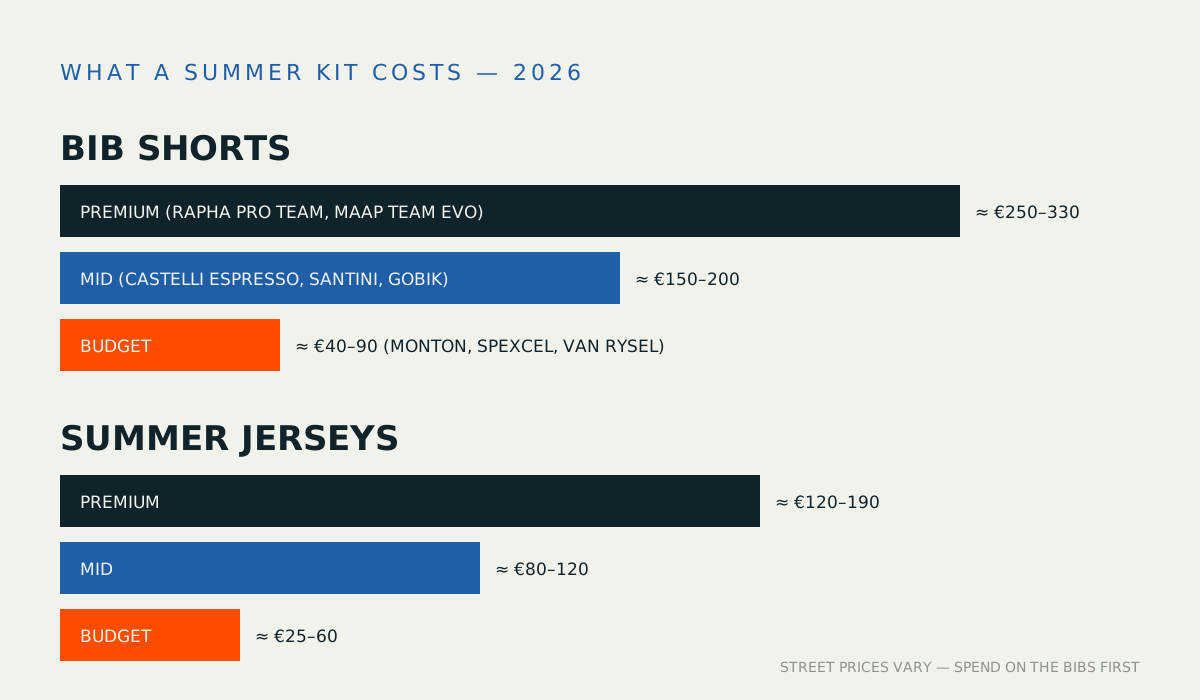
A premium bib short now costs more than some people's first bike. Meanwhile, direct-from-factory brands sell a full kit for the price of premium socks. Both camps swear by their choice. Here's our honest attempt at the question everyone googles and nobody answers straight: what are you actually paying for?
Where the money actually goes
Strip away the branding and a premium bib short is genuinely a different product in four places. The chamois is the big one: the top pads — multi-density foam, anatomical shaping, ventilation channels — are what let you sit on a saddle for six hours without thinking about it, and they're expensive to develop and license. Second, the fabric: high-end warp-knit materials hold compression ride after ride, while cheap Lycra bags out within a season. Third, the pattern: premium kit is cut from many more panels so it fits a riding position, not a mannequin. Fourth — and this is the underrated one — the stuff around the product: real size ranges, crash-replacement and repair programmes, and quality control that means the tenth pair fits like the first.
Where the cheap stuff genuinely competes
Now the uncomfortable truth for the premium camp: on a two-hour summer ride, a €50 bib from a direct-from-factory brand like Monton or Spexcel does the job for most riders. The fabrics have improved enormously; the fit misses are survivable at summer temperatures; and a summer jersey is honestly the easiest garment in cycling to make acceptably well — it's a breathable shirt with three pockets. The budget brands' weak points are consistency (two identical orders can fit differently), chamois quality past the three-hour mark, longevity under weekly washing, and sizing that often runs slim and small. None of those matter much for the rider doing ninety minutes on Sunday. All of them matter for the rider doing 200-kilometre days.
The mid-tier is the actual answer for most people
The quiet winners of this comparison sit in the middle: the race-classic houses. Something like Castelli's Espresso line, or the core ranges from Santini and Gobik, gets you perhaps ninety percent of flagship performance at half to two-thirds of the price — proper chamois, proper patterning, real quality control — without the fashion premium of the hypest labels. If you ride seriously but your budget is finite, this tier is where value density peaks. It's not a coincidence that these are the brands that also equip WorldTour teams: they know how to build the important parts and where corners genuinely can be cut.
So when is premium worth it?
Three honest cases. If you ride long — past three hours, the chamois difference stops being theoretical and starts being the reason you finish comfortable. If you ride often — cost per wear collapses when a garment survives four seasons instead of one, and repair programmes stretch that further. And, yes, if the kit makes you ride more — motivation is a real performance metric, and nobody needs to apologise for loving how a beautifully made jersey feels. What premium does not buy you is speed. The €330 bib will not drop anyone on the climb. It will still be comfortable when the €50 bib has been in the bin for a year — that's the actual transaction.
The Peloro split
If we had to spend one summer budget: put the serious money into the bibs — this is the piece where technical quality beats looks, every time. Go mid-tier or even budget on summer jerseys, where the performance gap is smallest and the fashion premium largest. Buy premium socks and cap anyway, because they cost little and lift everything (our picks live in the Kit Finder). And whatever the tier: buy fewer, better things in colours you'll still like in three years — the maths of cost per wear beats the maths of the sale rack. Current picks across all price points, updated weekly, in the Drop Radar and Hot Deals.
◂ Back to Journal