Racing · Opinion
Eight days in red: Pogačar, the Vuelta, and the kit nobody markets
He won the opening time trial, took the red jersey, and spent eight days making a Grand Tour look like a training ride. Then, 32 kilometres from the finish of stage 8, Tadej Pogačar went down in the middle of the peloton — and the race everyone had already conceded turned into something else entirely.
The domination, briefly
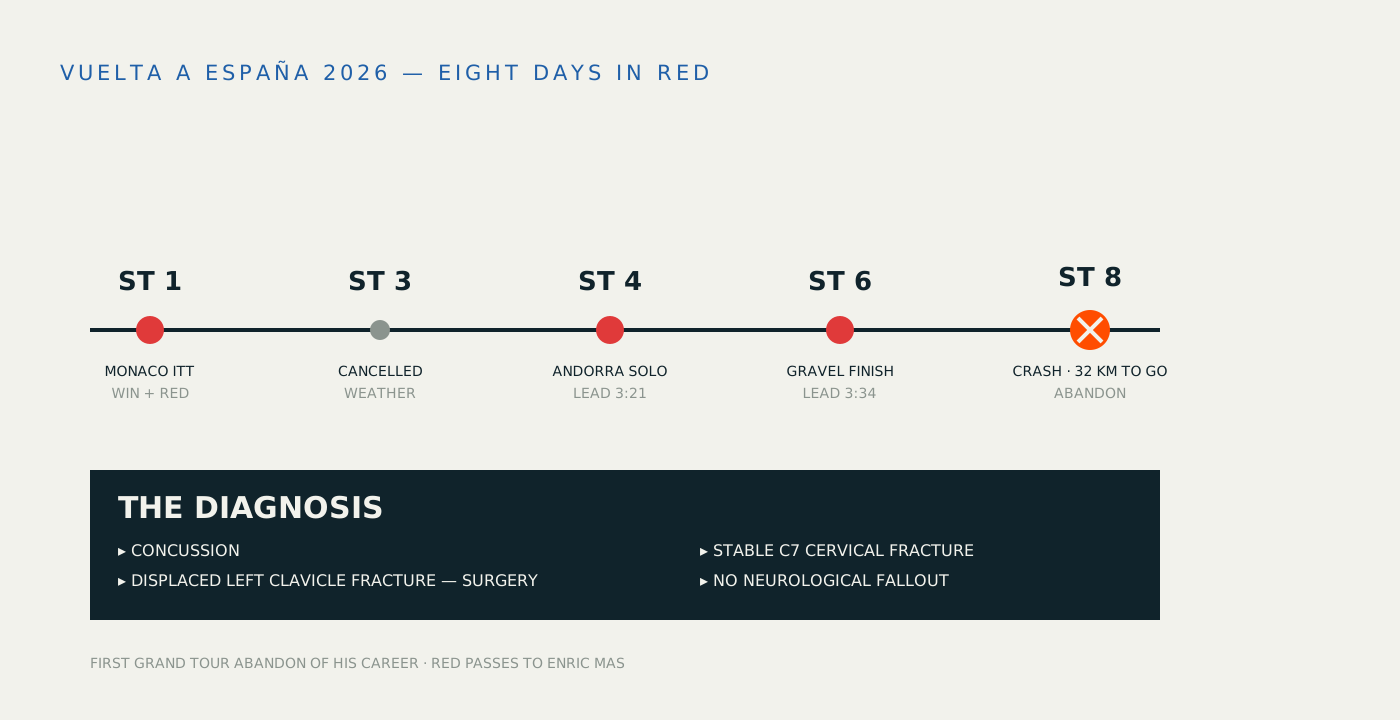
It started in Monaco on 22 August, where Pogačar won the opening individual time trial and pulled on red. Stage 3 was cancelled outright because of extreme weather. On stage 4 he went solo on the roads to Andorra and turned a bike race into a formality — after four days of racing his advantage was 3:21. On stage 6 he took his third stage win of the race, outsprinting Enric Mas after the pair broke clear on the gravel of the final climb into Castellón de la Plana, extending the lead to 3:34. He was chasing the one Grand Tour missing from his collection, having already won the Giro and five Tours.
Then stage 8, on the run-in to the Puerto de Barx: a crash in the middle of the bunch, deep wounds to his left shoulder and the left side of his face, several minutes sitting on the road surrounded by doctors, and then the helmet coming off. The first Grand Tour abandon of his career. The diagnosis that evening: concussion, a displaced left collarbone fracture requiring surgery, and a stable C7 cervical fracture — with, mercifully, no neurological fallout. Surgery on the clavicle followed once the concussion protocol allowed it and reportedly went well.
Enric Mas inherited the red jersey and declined to wear it on the podium that evening out of respect — a small gesture that said more about the peloton than any press release. Mas has since defended it with real conviction, attacking on the Calar Alto on stage 12 to extend his lead over Primož Roglič. The race that was over is now a race.
The kit nobody puts in a lookbook
Here is where we come in, and it isn't the obvious angle. Every brand we cover markets its kit on speed, thermoregulation, fabric partnerships and fit. Nobody markets the part that mattered most on stage 8: what happens when a rider hits tarmac at speed.
Bib shorts and jerseys are not protective equipment and shouldn't pretend to be — the helmet does the serious work, and Pogačar's neck and skull outcome is a reminder of how much that single item earns its price. But fabric behaviour in a crash is a real thing that varies enormously between garments, and it is almost never discussed. Denser, high-quality warp-knit fabrics abrade rather than instantly shredding. Flatlock seams tear more predictably than cheap overlocked ones. Full-length bib legs with good grippers stay put instead of riding up and exposing skin. None of this makes a garment "safe". It does make the difference between road rash and something worse in the sort of low-side slide that happens in every club race on earth.
What crash replacement actually tells you
Which brings us to a policy we've mentioned in passing several times and want to state plainly: crash replacement schemes are one of the most honest signals a brand gives you. Several labels we track run them — MBO offers 40% off a replacement piece, Lameda includes first-year crash replacement, and most of the premium houses operate some version of it.
The reason it's a signal is not the discount. It's that a brand offering crash replacement is making a statement about who it expects its customers to be: people who ride hard enough to occasionally fall off. A label that sells kit purely as fashion has no reason to build that programme. When you're comparing two jerseys at similar prices, the one from a brand with a repair service and a crash policy is telling you it expects to have a relationship with you beyond the checkout — and that's usually reflected in the construction too.
The uncomfortable part
There's a version of this article that turns a rider's injury into a shopping list, and we're not writing it. A concussion and a cervical fracture are not a content opportunity, and the sensible response to Pogačar's crash is to hope he recovers properly and to note that the sport's best rider has just demonstrated that nobody is exempt.
The transferable lesson is smaller and duller: replace your helmet after any impact, whatever it looks like from outside. Check the grippers and seams on old bibs before you race in them. And when a piece of kit does its job in a crash, remember which one it was — that's the review nobody publishes.
The Vuelta runs to Granada. We'll be watching Mas hold on, and hoping the rider who lit the first eight days up is back before the Worlds. Kit and gear as always in the Drop Radar.
◂ Back to Journal